

These AI Jobs Will Define 2026: Top Opportunities You Can Pursue Now
Photo by Google DeepMind
These AI Jobs Will Define 2026While the media continues to focus on how AI is taking people's jobs, there will be new jobs created with six figure salaries in 2026 that did not even exist several years prior to now.
The combination of AI Agents, Multimodal Systems, and Edge Computing are all creating new ways for Professionals who are able to quickly adjust their skill set for the AI Era. With so many top companies and major corporations competing to hire the best talent for these high paying AI Jobs, it is becoming more and more important for Professionals to adapt quickly and have the new skills needed for Artificial Intelligence to meet this increasing demand.

Photo by Google DeepMind
By 2026, these AI jobs will define the Professionalization of Artificial Intelligence within every Industry, as well as create new specialized AI Roles which are changing the work force.These new AI jobs include everything from AI Agent Orchestration (managing Autonomous Workflows) to AI Compliance Management (regulating Complex Regulations), etc. As the need for AI skills become more prevalent, the Job Market is beginning to change due to the need for more specialized AI Skills.
The numbers tell a strong story about what is happening with AI Agents; The AI Agent Market is predicted to grow from approximately $7 Billion in 2025 to approximately $93 Billion by 2032, also, 40% of Companies are expected to have AI Agents deployed by 2026.
This is not just another Technology Trend; It is a Fundamental Shift, Creating New Jobs, Faster Than Universities Can Develop Curriculum To Train For Them.
The 9 AI Roles That Will Shape 2026’s Job Market
The AI Revolution is evolving into a distinct set of high-paying career paths that combine very specialized sets of technical expertise with business savvy and strategic thinking.The eight jobs below, represent the most in demand careers and have been associated with the highest paid salary opportunities available today; for which employers will pay top dollar for talent.
Candidates who want to be successful in these career paths, need to have the technical and job-ready skills required to do their new jobs, and this can best be achieved by having hands on experience gained from real world, practical training.
It is therefore, important to know the beginning point for each of the AI career paths, so as to properly start out and continue developing your future in the AI field.

Gaining practical experience and understanding the hiring process will be an important first step for individuals who seek to become one of the many high demand professionals needed for these jobs.
AI Agent Orchestrator - Managing autonomous AI systems across enterprise workflows ($150k-$400k)
AI Agent Orchestrators are responsible for managing and maintaining the operation of a fleet of autonomous AI systems used to perform complex tasks associated with workflow automation, like coordination of digital teams involved in sales, logistics.There has been a significant increase in demand for these types of professionals as organizations transition from utilizing individual AI tools to developing full ecosystems of AI tools; particularly due to the increased regulatory requirements associated with the European Union's (EU) Artificial Intelligence (AI) Act.
• Key skills: Python, LangChain, AutoGen, MLOps, workflow automation.
• Pathway: Software engineers learn agent frameworks via free GitHub projects; aim for certifications like AWS AI Practitioner.
Multimodal AI Engineer - Building systems that process text, images, audio, and video simultaneously ($140k-$320k)
Multimodal AI Engineers build AI that can process multiple formats of information including text, images, audio, and video to create new intelligent customer service chatbots or to improve the accuracy of medical diagnostic processes.Tech giants and startups are racing to integrate this technology into their products and services as multimodal AI powers the creation of next-generation virtual assistants.
• Key skills: PyTorch, Transformers, computer vision, NLP, deep learning.
• Pathway: Data analysts add vision/speech courses on Coursera; build a multimodal portfolio app.
AI Safety Specialist - Ensuring AI systems operate safely and aligned with human values ($120k-$280k)
AI Safety Specialists test AI models for bias, risk, and ethical implications prior to deploying them in applications that have a direct impact on the lives of people; such as financial transactions, medical diagnosis, and self-driving vehicles.The need for AI Safety Specialists is expected to grow significantly as the EU begins enforcing the regulations outlined in its AI Act which is expected to hit industries most heavily regulated, like banks and healthcare.
• Key skills: Red teaming, alignment research, governance policies.
• Pathway: Compliance pros or devs take ethics certs (e.g., Google AI Ethics); volunteer for open-source safety audits.
Edge AI Developer - Deploying AI models on local devices and edge computing infrastructure ($130k-$250k)
Edge AI Developers design and implement lightweight AI algorithms on devices such as IoT sensors and in-vehicle computers to enable real-time decision-making without the need for cloud-based computing.Edge AI works in conjunction with or supports cloud computing where large-scale data storage and AI model deployment occur; thus enabling developers to create and deploy scalable AI applications. Edge AI Developers are experiencing increased demand in areas such as smart city infrastructure, autonomous vehicle development, and manufacturing (as well as other "edge" environments), primarily due to the increasing number of regulations requiring companies to maintain consumer data within a specific geographic region.
• Key skills: TensorFlow Lite, ONNX, model quantization, NVIDIA Jetson.
• Pathway: Embedded engineers optimize models via Udacity; prototype IoT projects.
Strategic and Business-Focused AI Roles

Photo by Rahul Pandit
The most highly compensated AI careers do not necessarily require a technical background but rather an ability to understand and implement the technology from both a strategic business perspective and a practical technical standpoint.The best candidates will be able to take complex AI technologies and turn them into tangible competitive advantages for their companies.
AI Product Strategist - Defining AI product vision and translating capabilities into business value ($160k-$350k)
AI Product Strategists develop product roadmaps for AI features that drive business results and help connect the tech teams responsible for AI development to the executive leadership team. As businesses begin to incorporate AI into the core of their products, not just pilot programs, these strategists are essential.• Key skills: AI tech knowledge + MBA-level strategy, market analysis.
• Pathway: Product managers study AI via bootcamps; pitch AI ideas in current role.
AI Safety Specialist - Ensuring AI systems operate safely and aligned with human values ($120k-$280k)
AI Safety Specialists create and test the governance frameworks that ensure that AI is aligned with company values and regulatory requirements by conducting audits and developing policy to prevent bias, risk and non-compliance with regulations such as those in the EU AI Act.With the enforcement of the EU AI Act beginning in high scrutiny areas including finance, health care and government, demand for these specialists is increasing rapidly.
• Key skills: Red teaming, alignment research, ethics policies.
• Pathway: Devs/compliance pros take Google AI Ethics cert; contribute to open-source audits.
AI Compliance Manager - Navigating AI regulations like the EU AI Act and ensuring ethical deployment ($110k-$240k)
These managers align AI with regs like the EU AI Act, auditing systems and crafting policies. Global firms need them for multi-jurisdiction compliance.AI Compliance Managers oversee the alignment of AI with regulatory bodies (such as the EU AI Act) and audit and develop policy to govern AI based systems. Many global companies need AI Compliance Managers to comply with multiple jurisdictions.
• Key skills: Legal AI interp, audits, policy dev.
• Pathway: Lawyers/HR learn AI basics; join compliance networks like IAPP.
Specialized Technical Positions
The majority of specialized engineer AI roles fall within a specific area of technology where, because of the high degree of specialization required for these types of roles; an engineer or developer can earn a premium wage.At the front end of this type of work is the machine learning AI engineer who is responsible for designing, developing, deploying and maintaining advanced AI systems and machine learning based solutions to improve business operations and resolve difficult technical issues. There are many different specialized technical skills being sought after for jobs involving technical AI including object detection, particularly in areas such as computer vision, autonomous vehicles and robotics.
The positions that have a need for object detection typically require several years of intense study in order to be proficient enough to fill one of these technical AI positions, and provide one of the most exciting technical challenges in the field.
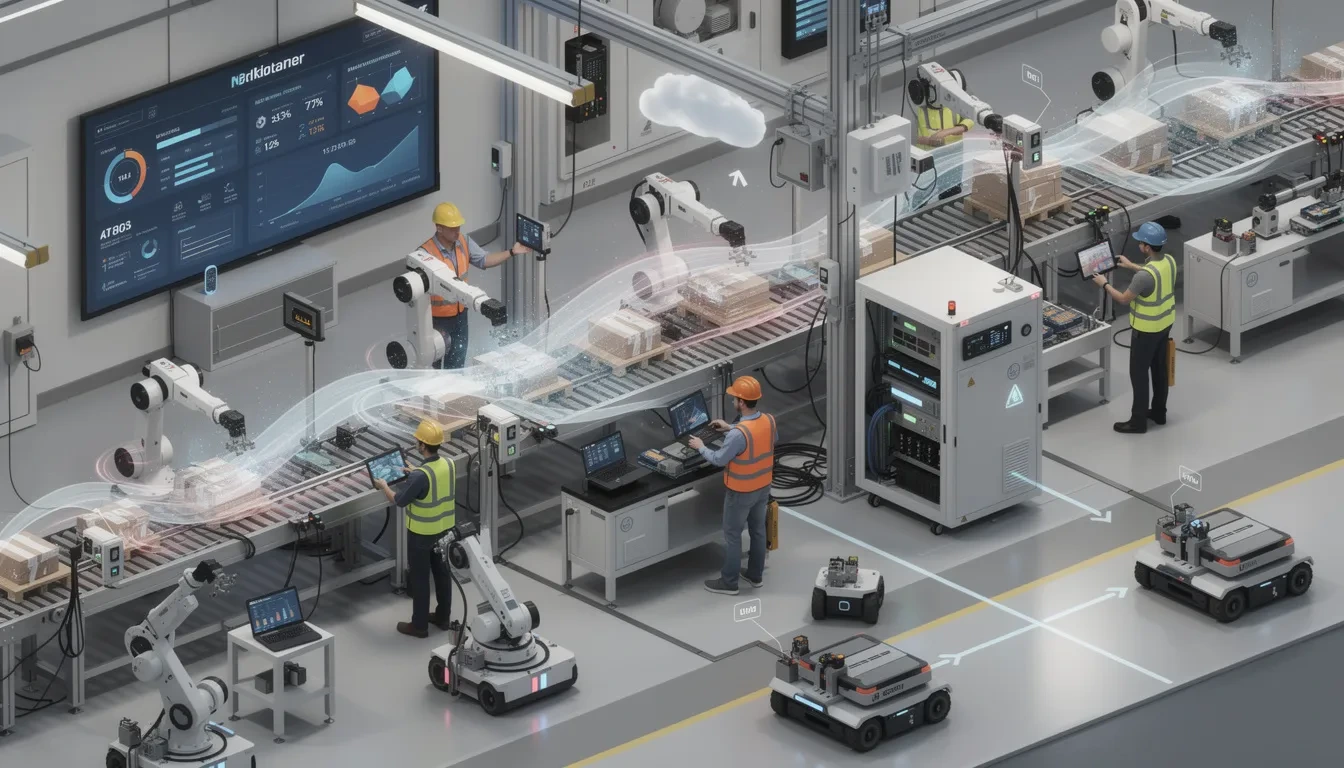
While machine learning engineers build and maintain AI and machine learning based systems (which utilize large amounts of data), they work closely with data scientist to develop, deploy and optimize AI and Machine Learning Models.
Conversational AI Architect - Designing advanced chatbots and voice assistants that feel human-like ($125k-$275k)
Conversational AI Architects create AI chatbots and voice assistants that can communicate in natural language (i.e., human language) using business data; retail and financial companies use them instead of customer service departments.• Key skills: NLP, dialogue systems, APIs, UX design.
• Pathway: Chatbot devs advance with Rasa; build enterprise bots.
AI Data Curator - Managing and optimizing training data for large language models ($100k-$220k)
AI Data Curators collect, prepare, optimize and or correct data for custom AI and ensure that data is both of high-quality and compliant with regulations. This is key when developing proprietary models for regulated industries.• Key skills: Data engineering, privacy laws, bias mitigation.
• Pathway: Analysts master tools like Snorkel; curate public datasets.
Entry Level Jobs in AI
Not only will artificial intelligence be producing upper-level specialized roles but it will produce a large number of entry level positions in the AI industry for those interested in pursuing a career in this rapidly changing field.With many companies from all sectors continuing to develop, implement and adopt AI technology and intelligent systems, there is an increasing need for talented professionals and the timing is ideal to get started in Artificial Intelligence.
Many of the most popular entry level job positions in the AI sector include:
Skills required: The typical qualifications for entry-level AI jobs generally include a strong programming base (with python being particularly important), knowledge of machine learning, data analysis, working with big data sets and soft skills like a willingness to be adaptable and curious, along with good communication skills, as many AI groups work across functional areas.
How to get started: Professionals generally start their journey through completing online courses or boot camps in Data Science, Machine Learning, or Software Development. Contributing to open source AI Projects, adding to GitHub Repositories, and Interning at Companies that use AI Systems are all great ways to get hands-on experience in AI and prepare yourself for employment.
Because the need for AI Skills is continuing to grow and because AI Technologies continue to evolve and appear in everyday lives, Entry Level Jobs in Artificial Intelligence provide a great way and a strong starting point to create a career that will remain relevant over time.
These jobs can quickly turn into more technical opportunities such as Machine Learning Engineering, Data Scientist, or AI Product Strategy, making Entry Level Jobs in AI a fantastic place to start your career and excel in the AI Age.
Why These Roles Will Dominate 2026

Photo by Google DeepMind
A variety of emerging trends in converging technology have created a historically high demand for these specific types of advanced AI careers. According to the World Economic Forum, while AI will create more jobs than it eliminates; however, the new job titles will have different skill sets than those traditionally associated with each position.AI is no longer an experimental technology or a tool used by businesses to perform simple automation, rather intelligent systems are being deployed into companies to manage complex multi-step business processes.
As AI continues to automate more routine, procedural and repetitive tasks, the nature of the workforce will continue to move toward individuals with higher level problem solving and strategic thinking abilities. In addition, as AI moves from simply being used as a tool (ai workload) the need for workers who understand the technical capabilities of the systems and how the systems fit into the larger business processes will increase.
The convergence of multiple modalities of AI has also enabled the development of completely new categories of applications that were not possible with single modality systems.
The ability to process both text, images, audio and video simultaneously has opened up new opportunities within the areas of content creation, customer service, health care diagnostics, and scientific research. Organizations will require the same type of engineer to develop these sophisticated systems, as well as strategist who can identify the most impactful applications.
Growth of Edge Computing is being driven by the requirement for real time processing of AI in Autonomous Vehicles, Smart Cities and Industrial Automation. The $43.6 Billion Edge Computing Market by 2027 represents a significant investment in infrastructure and represents a significant demand for professionals with the necessary knowledge to implement and maintain AI capabilities on the Network Edge.
Regulatory frameworks are establishing an entirely new category of Compliance and Safety professional roles. The implementation of the EU's AI Act has already created an immediate demand for professionals with the knowledge of navigating complex regulations, while maintaining the efficacy of AI Systems. Similar frameworks are being developed by other jurisdictions, thereby increasing the complexity of compliance for Global Organizations.
High-Growth Technical AI Roles
The technical roles for artificial intelligence that are growing at the fastest rates in terms of salaries and job demand will be those involving building predictive models, because many of the technical AI jobs in which these types of models are used are critical to solving business issues or predicting trends.As such, the need for employees with the ability to build predictive models has become increasingly urgent. In order to create these predictive models, employees with strong technical knowledge are needed; however, it is also through these types of positions that engineers can achieve the highest salaries.
AI Agent Orchestrator
The rapid growth of large-scale AI Ecosystems and the resultant need to coordinate multi-agent systems (MAS) is driving an unprecedented demand for skilled professionals who can effectively plan, implement and manage complex agent interactions.AI Agent Orchestration Professionals are working within frameworks such as LangChain and AutoGen, to build MAS that allow multiple AI Agents to work together to complete business process tasks.
Key responsibilities for AI Agent Orchestration Professionals will be developing protocols for how the AI Agents will communicate, monitor the performance of the AI Agents across a distributed system and optimize the workflow in which one AI Agent hands off to another AI Agent or to a Human Worker. The technological complexities of this role will require professionals to understand both Machine Learning Systems and Distributed Computing Architectures.
As companies have found out that managing multiple AI Agents requires the same level of planning and coordination as managing a team of humans, but with a higher degree of technological complexity; there has been a corresponding increase in salaries for AI Agent Orchestration Professionals, ranging from $150k-$400k due to the limited number of professionals with the combined skills required to effectively orchestrate agents and the resulting business value of successfully orchestrating agents.
Multimodal AI Engineer
The development of multiple AI modalities, like text, image, audio, and video, requires engineers who are knowledgeable about how various machine learning models work with one another. Multimodal AI Engineers design and develop systems that can process, and therefore analyze, multiple forms of input at the same time.For example imagine a multimodal system that simultaneously analyze a customer service ticket and an image of the product they purchased, or creating marketing content by integrating both text and visual elements.

Photo by Pavel Danilyuk
In terms of technical requirements, these engineers require familiarity with transformer architectures, computer vision, speech recognition, and the issues associated with integrating different types of models. In addition to understanding the integration aspects of models, these engineers will be required to have knowledge of the operational and financial impacts of running multiple models of AI concurrently.Compensation levels are most competitive among those companies developing next generation AI assistants and creative tools where their use of multimodal capabilities creates competitive advantage. The requirement to address complex problems related to analysis of multiple types of data is necessary to support many current and emerging advanced AI technologies, which supports the rationale for salaries ranging from $140,000 to $320,000.
Edge AI Developer
Edge AI developer will have a deep understanding of hardware constraints; model compression techniques (quantization, pruning); and the specific needs of real time processing for the efficient deployment of AI models at the edge. They will use tools such as TensorFlow Lite and NVIDIA Jetson to deploy intelligent systems on devices with limited processing power and memory.The developer will be required to understand the trade offs between the accuracy of an AI model and its ability to compute efficiently; develop strategies to improve the performance of an AI model using techniques such as quantization and pruning; ensure the reliability of the operation of an AI system under adverse environmental conditions; and integrate the capabilities of AI with the capabilities of existing industrial systems and IoT infrastructure.
There is significant demand from manufacturing, healthcare, and automotive industries as these industries are developing and deploying systems which are dependent upon AI for immediate responses without being connected to a cloud environment. This combination of technological complexity and strategic importance supports the $130K-$250K salary range.
Strategic and Business-Focused AI Roles
The most highly compensated career paths are those that combine a solid foundation in AI, with business strategy. Those individuals who will be successful in this field must have the ability to determine what types of AI capabilities are of value to businesses and then convert those capabilities into competitive advantageAI Product Strategist
An AI Product Strategist bridges the gap between technology and business strategy by determining which AI capabilities have the potential to create long term, sustainable competitive advantages for businesses. This professional must be able to provide insight to both current AI limitations, and future AI capabilities in order to make educated decisions regarding product development priorities.To perform effectively, an AI Product Strategist will analyze the marketplace for opportunities for use of AI; evaluate whether there is technical feasibility for developing new products or services using AI; and coordinate with engineering departments to ensure that new AI-based features are providing measurable business value.
A successful strategist will also understand how the timeline for development of AI solutions relates to business cycles and competitor activity.
Demand for AI Product Strategists continues to grow because AI has matured from being a developmental technology to being a foundational business capability. As such, businesses are looking for professionals that can help them to avoid costly AI pilot projects that do not scale, and focus on AI applications that create long-term value to their organizations. Compensation for AI Product Strategists can range from $160,000 to $350,000, and typically includes equity in the organization to reflect the strategic nature of their decision making.
AI Safety Specialist
The growing number of businesses using high-risk AI technologies are increasing the need for individuals who can identify AI-related threats to business operations early enough to mitigate them.AI Safety Specialist’s are developing ways to test methodology, creating governance models and ensuring that as AI becomes more independent it remains in line with an organization's values and mission.
Examples of a Technical role may be developing red team testing methodologies and/or testing methods, identifying if an AI system has developed a bias or "drift" from its original programming, and creating protections to limit or eliminate dangerous outputs.
Examples of a Business role may be converting safety requirements into actionable operational policy, working with legal departments to determine and document liability related to an AI deployment.
Regulatory pressure is also accelerating demand as the financial and healthcare industries begin to consider fines/penalties for AI deployments that have not been properly tested for safety.
These industries will likely continue to be among the most aggressive in hiring AI Safety Professionals because of their use of AI in customer facing processes and high-risk decision making processes. The combination of technical knowledge and ability to manage the associated risk will contribute to the $120k-$280k salary range.
AI Compliance Manager
AI compliance managers are required for navigating a rapidly changing environment of evolving regulations on use of AI, in order to apply understanding of legal regulation and technology-based capabilities of AI.They perform an audit of all compliance for all current AI systems, create a policy that satisfies all regulatory requirements yet does not limit innovation, work with the legal department to define new legislation related specifically to AI and work with the technical departments to install the necessary documentation and monitoring mechanisms.
Global companies have the most difficult time complying due to the need to comply with varying regulatory environments when deploying AI systems globally. For example, the EU's AI act has immediate regulatory implications, whereas other jurisdictions are still creating their own framework. Therefore, the specialized knowledge needed to navigate these issues warrants salaries between $110K and $240K.
Specialized Technical Positions
The most valuable positions in AI are those that have a high level of technical specialization. They provide many of the most challenging and interesting technological issues in developing artificial intelligence. One of the fastest-growing fields within the specialized technical ai positions is AI-based drug discovery which is changing how we do health care innovation through accelerating medical research and the creation of new medicines.Conversational AI Architect
To develop conversational systems that will be truly useful, an architect needs to understand how to manage dialogues; maintain context; and integrate conversational systems into other systems used in businesses. A Conversational Architect designs conversational systems that can engage in natural conversation, access appropriate information, and complete transactions.Some of the technical skills needed by a conversational architect include: natural language processing (NLP); dialogue state tracking (DST); and the technical integration challenges of linking conversational AI with the systems used by businesses. Also, architects need to know about user experience design principles and what makes conversations between humans seem natural.
The business benefit includes replacing expensive human customer service while providing customers with the same or improved level of satisfaction.
As a result, there is significant interest in implementing conversational AI in areas such as: health care; and financial services, particularly when implementing conversational AI for the most sensitive interactions which require both technical expertise and regulatory compliance. The $125k-$275k salary range for a successful implementation of conversational AI reflects both the technical complexity of the position and the business benefits that come from its successful execution.
AI Data Curator
As a result of high-quality training data being the major competitive advantage for custom AI models; this is creating a strong demand for professionals that are able to collect, clean, and enhance data for use by machine learning systems. AI Data Curators provide assurance that training data reflects various perspectives while adhering to all applicable legal and ethical standards..webp)
Photo by Google DeepMind
AI Data Curators require data engineering skills to process large datasets, legal knowledge to navigate the data rights and privacy laws that apply to each dataset, and quality assessment expertise to ensure that the training data is adequate to generate reliable AI models. In addition to these technical and legal skills, AI Data Curators must have an understanding of how data bias may impact the behavior of AI systems.This is why companies developing their own proprietary AI models create the most demand as they require domain-specific training data that cannot be found in public datasets.
Due to the technical skills required to effectively curate data, combined with the legal and ethical complexity of the work, AI Data Curators are compensated between $100k-$220k.
How to Position Yourself for These 2026 AI Careers
To be successful in the emerging AI career fields, one needs to strategically develop their technical skills while gaining an understanding of the business side of things. Those professionals earning the highest pay, understand how the technology of AI works and how it can practically apply to real-world business environments.Begin by developing foundational technical skills such as python programming, machine learning basics and working with the major cloud providers. Once you develop your technical foundation, you will have a solid base of knowledge to understand how AI systems operate, and how they fit into current business operations. In addition, focus on developing practical experience (hands-on) versus just theory.
Position yourself by auditing your CV free
LangChain for building AI agents, and multimodal model frameworks represent the cutting-edge in AI development. Professionals that develop hands-on experience with these tools before they become the standard tool used in the job market will be at a great advantage.
Open source AI agent projects give professionals the opportunity to gain valuable hands-on experience. Some of the largest organizations in the world such as Google DeepMind lead in AI research and hire many of the best professionals in the industry.
The emergence of the "prompt engineer" as a new and very important job category within the field of generative AI, shows the rapidly changing nature of the career landscape of AI. The role of a "prompt engineer" is critical in coordinating AI output, integrating AI with human teams, and providing the necessary oversight to ensure safe and effective AI deployments across various industries.
Developing business acumen has also become a key differentiator between successful AI professionals and those relegated to purely technical roles. Developing an understanding of how AI contributes to creating business value, the cost and timeline associated with developing AI solutions, and the organizational challenges associated with implementing and adopting AI technologies enable professionals to participate in strategic decision-making and not just limited to implementation responsibilities.
As regulatory requirements and safety standards continue to grow, it is imperative that professionals stay current on AI regulation and safety protocols. Structured learning opportunities exist through online courses and certification programs. Industry conferences and professional communities allow professionals to connect and learn from other experienced professionals in the field.

Industries Driving the Highest Demand
While several industries have been using AI, they are all at varying stages of implementation, each requiring different types of professionals, so understanding the top-growing areas will help direct career choices and training priorities.The Financial Services industry has the highest rate of AI implementation as well as compensation and includes AI Agents performing trading decisions, Risk Management, and Customer Service Automation. Banking and Investment firms are currently utilizing AI Systems to perform Fraud Detection systems, Regulatory Compliance, and Personalized Financial Advice.
As a result of the high level of technical complexity, combined with Regulatory Requirements; there is a large demand for Professionals with both AI Expertise and Financial Industry knowledge.
AI Applications are also being implemented quickly in the Healthcare industry, specifically Edge AI for Medical Devices and Multimodal AI for Diagnosis and Treatment Planning. Professionals will be needed that can demonstrate a combination of Technical Capabilities, Healthcare Regulations and the ability to implement AI Solutions that improve Patient Outcomes and reduce Costs.
The Manufacturing sector is also utilizing AI Agents to coordinate Smart Factory Operations and Predictive Maintenance Systems.
The integration of AI with Industrial Equipment requires Edge AI Specialists that can demonstrate an understanding of both Machine Learning and Industrial Engineering. Strong Demand exists for Professionals that can Implement Reliable AI Systems within Challenging Environments to Increase Operational Efficiency and Reduce Downtime.
Retail Companies are Investing Heavily in Conversational AI to Support Customer Inquiries and Personalize Shopping Experiences. Professionals are required that understand both AI Technology and Retail Operations due to the Integration of Business Systems and Customer Interaction. Accelerated Growth in E-commerce is Increasing the Demand for AI Systems that can Handle Customer Inquiries and Provide Personalized Recommendations at Scale.
Automotive Manufacturers are Developing Edge AI Systems for Autonomous Vehicles and Real-Time Decision Making Capabilities. The Safety-Critical Nature of Automotive Applications Requires AI Safety Specialists and Edge AI Developers that can Ensure Reliable Operation within Challenging Conditions. The Transition to Autonomous Vehicles Represents One of the Largest AI Deployment Opportunities Across Multiple Technical Specialties.
Salary Trends and Market Outlook
AI salaries are growing dramatically due to competition among a few companies seeking highly skilled professionals with significant AI experience. In 2025, AI job salaries grew by 21% versus those of traditional tech roles; this premium reflects both the scarcity of individuals capable of applying their AI experience effectively on behalf of an organization and the increasing use of AI capabilities as a strategic tool.Companies are willing to pay premium salaries in order to attract and retain talented professionals with demonstrated AI experience. These two factors (high demand and limited supply) have created a situation where AI-based compensation exceeds that of comparable traditional tech roles. For example, entry-level AI jobs will often begin at salary ranges typical of mid-career professionals in other industries.
As remote work expands globally, so too does access to high-compensation AI-based jobs. Regardless of their geographical location, professionals now have greater flexibility to pursue employment opportunities in AI roles. This is particularly beneficial for experts in emerging sub-disciplines such as AI agent design and multimodal AI. Because there may be very little local talent available in these areas, remote work provides much-needed access to these types of employment opportunities.
Equity compensation has become commonplace for AI-based roles at startups and companies undergoing rapid growth, thereby adding another layer of financial upside beyond base salary for professionals in these types of roles. The rapid growth of AI companies and the strategic significance of AI capabilities means that professionals who join these organizations early on will likely receive meaningful amounts of equity which can provide long-term financial returns.
It is anticipated that the demand for AI-based professionals will exceed the number of qualified professionals available through 2026 as AI is being implemented by organizations at a rate that is far exceeding the rate at which educational institutions are able to prepare qualified professionals to fill these needs.
This supply-demand imbalance continues to drive higher salaries for professionals in AI-based roles and opens up new career paths for non-technical professionals who are willing to take the time and effort required to develop the appropriate skills to apply their experience in an AI context.
In addition to technical complexities associated with the application of AI, the business value of successful deployments of AI-based solutions is also reflected in the premium paid for AI skills. Organizations are finding that deploying AI-based solutions effectively requires the development and application of specialized knowledge that results in higher compensation. Professionals who combine technical skills with business acumen and knowledge will ultimately be the most valuable.
Building Your 2026 AI Career Strategy
To be successful in today’s AI job market you need to have a focus, but also a broad view of the future of AI. The best professionals in this field are those that bring together deep technical knowledge of a few areas of AI, combined with practical experience using AI solutions in business settings.You should choose to specialize in either:
1) AI Agents (agents are software programs designed to make decisions on behalf of a user)
2) Multimodal AI (multimodal means that it can process and understand information from multiple sources at once; i.e., image, audio, video, etc.)
3) Edge Computing (edge computing refers to processing data closer to where it was generated)
This will provide you with an opportunity to build deep expertise and give you a solid foundation to expand into other areas of AI. The areas listed above are complex enough that you will need to dedicate time and effort to studying them and gaining practical experience working with them.
As well as developing deep expertise in one area, create a portfolio that demonstrates the practical application of AI and its business benefits. In today’s environment employers want to see proof that AI technology has delivered real business value. Document and measure your AI projects so you can show how they solved a real problem and what the results were.
Attend conferences and networking events such as; local meetups, conferences, and social media groups to connect with other professionals working in AI. As an AI professional, you will need to continually educate yourself about new developments in the field, and learn from others with experience. Networking is key to finding job opportunities and learning from others.
Also consider obtaining AI-related certifications from major cloud providers and AI companies. Experience is still the top factor when hiring for AI professionals, however having a certification that shows you have the current knowledge and training required for your selected specialization area, will give you an advantage when entering the job market.
Consider transitioning to AI-adjacent roles in your current company or industry. Many industries are adopting some level of AI capabilities into their existing role structures. This will allow you to gain the necessary experience working in AI without having to start over and enter a completely different industry.
There are many AI-related jobs available now, and there will be even more by 2026. If you continue to develop your skills and adapt to the ever-changing landscape of AI, you will be in high demand. Professionals who continuously learn and evolve with the advancements in AI will find the greatest opportunities for advancement and salary increases.
In the long run, to be successful in the AI job market you need to have a combination of technical expertise in AI, along with a good understanding of business and how AI technologies can address business challenges. The highest paid roles are those that can take the capabilities of AI and translate them into business value. Developing the technical and business skills will prepare you for senior level roles as AI continues to become a core part of every company's business strategy.
The AI job market of 2026 will present never-before-seen opportunities for career development and salary growth. These AI jobs will define 2026 as it will establish the first generation of professionals whose careers are based upon the full professionalization of artificial intelligence across all industries.
Those that strategically position themselves for these emerging AI jobs will have an unparalleled opportunity to advance their careers and earn the salaries that come with being a key player in the rapidly expanding AI job market.

Contributor
Emmanuel Sanni
Emmanuel is passionate about digital transformation, service excellence, and sustainable human-centric leadership. Outside of his professional role, he is actively involved in church ministry and enjoys exploring local history and emerging technology trends.
