

The Future of Work: How Technology is Changing the Job Market
Photo by Cottonbro Studio
The world of work is now in the middle of a change that many might consider even more dramatic than the changes experienced during the Industrial Revolution. Within the next five years, nearly half of all workplace skills will become obsolete, while entirely new job categories driven by technology are emerging faster than ever before.I didn't make up the forecast, its backed up by World Economic Forum.
Emerging technologies, such as artificial intelligence, robotics, and automation, is a key driver of this rapid change, transforming industries and the nature of work itself. This technological revolution isn’t just changing how we work. It’s fundamentally reshaping and redefining what work means.
From artificial intelligence automating complex decision-making to remote work platforms connecting global talent pools, the future of work is being rewritten in real time. Digital technology is enabling new forms of work and economic growth by creating entrepreneurial opportunities and supporting new revenue streams across sectors. Understanding these changes isn’t just about staying current; it’s about survival in an economy where adaptability determines success.
Technology is changing the job market, and we can all see the immediate impacts that is reshaping the workforce and the long-term trends that will define careers through 2030. These technological advancements are generating new jobs across industries such as IT, data analysis, and small business support, highlighting the positive impact of innovation on employment opportunities.
Whether you’re a business leader planning workforce strategy, a worker navigating career transitions, or you're simply curious about what lies ahead, I'll share some insights you need to thrive in tomorrow’s workplace.

Technology’s Immediate Impact on Today’s Job Market
The statistics surrounding today’s job market transformation are staggering. The world economic forum’s 2023 report delivers a sobering reality check about the pace of change affecting workers globally.Here are the key numbers reshaping employment today:
23% structural labor market churnpredicted over the next five years, with 10.2% job growth balanced against 12.3% job decline • 44% of workers’ current skills will be disrupted by 2027, requiring massive reskilling efforts across all industries • 60% of occupations have at least 30% of activities that are technically automatable with current technology • 75% of companies plan to adopt AI within five years, fundamentally changing how work gets done • 1.2 billion workers could be impacted by automation globally, affecting $14.6 trillion in wages
About half of companies have a positive outlook on job prospects amid technological change, while others anticipate negative impacts.
These numbers represent more than statistical projections—they signal a fundamental shift in how business leaders approach talent acquisition and workforce planning. Companies are simultaneously eliminating traditional roles while creating entirely new positions that didn’t exist five years ago.
The hiring process itself reflects this transformation. Job seekers now encounter AI-powered screening systems, while employers struggle to find candidates with the specific skills demanded by emerging technologies. This mismatch between available talent and job market needs is driving unprecedented investment in training and development programs.
What makes this transformation unique is its speed. Previous technological revolutions unfolded over decades, giving workers time to adapt gradually. New technology is a primary force behind these rapid changes, compressing the timeline into years and demanding immediate action from workers, employers, and educational institutions alike.
Artificial Intelligence and Automation Reshaping Work
Artificial intelligence and automation are fundamentally changing which tasks humans perform versus what machines can handle. Unlike previous waves of automation that primarily affected physical labor, today’s AI tools are automating human-centric activities like decision making, coordination, and complex communication.The scope of this transformation extends far beyond simple repetitive tasks. Generative AI now assists with creative work, data analysis, and even strategic planning. Machine learning algorithms are becoming sophisticated enough to handle nuanced customer interactions, while big data analytics inform business decisions that once required years of human experience.
Current automation statistics reveal the breadth of impact:
Less than 5% of occupations can be fully automated, but partial automation affects most jobs • AI and Big Data now rank as the 3rd priority in company training programs through 2027, up from 15th position today • 60% of occupations contain at least 30% of activities that current technology can automate • Generative artificial intelligence adoption has increased 66% annually among UK employees
The key insight is that automation isn’t just replacing workers, it’s also changing what the rest of the workforce is doing. Many jobs are being augmented rather than eliminated, with AI tools handling routine elements while humans focus on higher-value activities requiring emotional intelligence, creativity, and critical thinking.
AI-powered digital talent platforms are also improving the matching of workers to job openings, helping to increase labor market efficiency and reduce unemployment.
Jobs Being Eliminated vs Jobs Being Created
The labor market is experiencing simultaneous destruction and creation of employment opportunities. Traditional manufacturing roles, data entry positions, and routine customer service jobs are declining as automation handles these mundane tasks more efficiently than human workers.However, job creation is happening just as rapidly in new areas:
Declining Job Categories: • Manufacturing assembly line workers • Data entry clerks and basic administrative roles • Call center operators handling routine inquiries • Bank tellers and basic financial processing jobs
Emerging Job Categories: • AI ethics specialists ensuring responsible technology deployment • Machine learning engineers developing intelligent systems • Human-AI collaboration managers optimizing worker-technology partnerships • Cybersecurity analysts protecting digital infrastructure
The pattern mirrors historical technological transitions. One-third of US jobs created in the past 25 years were in occupations that barely existed before the digital revolution. Today’s new technologies are creating opportunities in areas like data science, digital marketing, and user experience design that were unimaginable a generation ago.
Green jobs and sustainability specialists are seeing the highest growth rates, driven by both technological advancement and environmental concerns. These roles combine technical skills with environmental knowledge, creating career paths that didn’t exist in traditional industrial sectors.
The net impact shows job quality often improving even as job quantity shifts. New roles typically require higher skills and offer better compensation than the positions being automated, though they also demand continuous learning and adaptation from workers.
The Skills Revolution: What Workers Need Now
The skills landscape is undergoing a complete transformation, with cognitive abilities and technical expertise becoming the primary currency of the modern workplace. Employers are fundamentally changing how they evaluate talent, moving away from traditional degree requirements toward skills-based hiring that focuses on actual capabilities.Major companies like Google, IBM, and Apple have eliminated degree requirements for many positions, instead prioritizing demonstrated competence in specific technical skills and soft skills that complement automated systems. This shift reflects a broader recognition that formal education isn’t keeping pace with technological change.
Top Priority Skills for 2025-2027: • Analytical thinking and creativity - ranked as the most valuable cognitive skills by business leaders • Emotional intelligence and leadership - becoming more valuable as AI handles routine tasks • Technical skills in emerging technologies - cybersecurity, data science, and digital marketing seeing explosive demand • Adaptability and continuous learning - essential for navigating rapid technological changes
The data reveals a clear trend: as automation handles routine cognitive tasks, uniquely human capabilities become more valuable. Workers who can combine technical proficiency with creative problem solving, emotional intelligence, and complex communication skills are positioned for the greatest success.
Skills-based hiring is revolutionizing talent acquisition. Instead of filtering candidates by educational credentials, employers now use practical assessments, portfolio reviews, and demonstrated project experience to evaluate capabilities. Companies are increasingly focusing on skills development and continuous learning initiatives to keep pace with technological change. This approach opens opportunities for workers who have developed skills through non-traditional paths while ensuring companies find talent that can actually perform required tasks.
The emphasis on human skills reflects a fundamental shift in how we think about human-machine collaboration. Rather than competing with AI tools, successful workers are learning to leverage these technologies to amplify their uniquely human capabilities.
Critical Technology Skills for 2025-2027
There are specific technical skills that are experiencing unprecedented demand as companies rush to implement new technologies and protect their digital assets. These aren’t just nice-to-have capabilities; they’re becoming essential requirements across industries.Cybersecurity Expertise: Growing digital threats and remote work adoption have made cybersecurity skills critical for protecting sensitive data and maintaining business operations. Organizations need specialists who can design secure systems, respond to incidents, and train employees in security best practices.
Data Science and Analytics: The explosion of big data requires professionals who can turn complex datasets into actionable business insights. This includes statistical analysis, machine learning implementation, and data visualization skills that help organizations make evidence-based decisions.
UX/UI Design: As businesses move operations online, creating user-friendly digital products and services becomes essential. Designers who understand both technical constraints and human psychology are in high demand across all sectors.
Digital Marketing: The shift toward online customer acquisition requires specialists in search engine optimization, pay-per-click advertising, social media management, and content marketing. These skills help businesses reach customers in an increasingly digital marketplace.
Workers developing these technical skills often command premium salaries and enjoy significant job security. However, the key to long-term success is combining technical proficiency with business understanding and communication skills that enable effective collaboration with non-technical colleagues.
The rapid evolution of these technologies means continuous learning is essential. Professionals must stay current with new tools, platforms, and methodologies to remain competitive in the job market.
Human Skills in the Modern Workplace
As technology continues to reshape the workplace, human skills are emerging as the true differentiators in the job market. The World Economic Forum highlights that while artificial intelligence and machine learning are automating many repetitive and mundane tasks, they are also elevating the importance of critical thinking, creativity, and emotional intelligence.Employers are increasingly seeking job seekers who can perform tasks that require uniquely human capabilities, such as problem solving, decision making, and effective collaboration.
The hiring process is evolving to reflect this shift. Companies are not only assessing technical skills but are also placing greater emphasis on soft skills like communication, adaptability, and teamwork. AI tools may screen for technical proficiency, but it is the ability to think critically, approach challenges creatively, and work well with others that sets top candidates apart.
Workers must focus on developing specialized skills that complement technology, rather than compete with it.
By honing their human skills, employees can take on roles that require judgment, empathy, and innovative thinking, areas where machines still lag behind. As the workplace continues to evolve, those who invest in both technical and soft skills will be best positioned to thrive in the world of work.
Data Science and Analytics in the Workplace
Data science and analytics have become essential drivers of business success in the modern workplace. As companies harness the power of big data and machine learning, the ability to analyze and interpret complex datasets is transforming how organizations make decisions and create value.The World Economic Forum identifies data science and analytics as among the top skills required in today’s job market, alongside critical thinking and creativity.
Employers are actively seeking job seekers with specialized skills in data analysis, as these professionals help companies improve job quality, optimize talent acquisition, and uncover new business opportunities. From predicting market trends to enhancing customer experiences, data-driven insights are helping companies remain competitive in a rapidly changing world.
The demand for workers skilled in data science, machine learning, and big data analytics is only expected to grow as technology advances. For those looking to future-proof their careers, developing expertise in data analysis and interpretation is a strategic move.
By combining technical proficiency with creative problem solving, workers can play a pivotal role in helping companies navigate the complexities of the digital age.
Remote Work and Digital Platforms Transforming Employment
Remote work has evolved from an emergency pandemic response to a permanent fixture of the modern workplace. This transformation goes far beyond just location flexibility, it’s fundamentally changing how companies access talent, how workers structure their careers, and how the global economy functions.The statistics reveal the magnitude of this shift:
• 20-30% of working-age population in the US and EU now engaged in independent work through digital platforms • 80% of Fortune 500 companies have made hybrid work models permanent post-COVID • Geographic barriers breaking down as companies access global talent pools previously unavailable • Digital talent platforms like Upwork and Fiverr improving job matching while reducing hiring time and costs
This transformation extends beyond traditional employment relationships. Digital platforms are creating new forms of work that blur the lines between full-time employment and freelance contracting. Workers can now build careers by combining multiple income streams, geographic flexibility, and project-based work that was impossible in traditional office-based employment.
The technology infrastructure supporting remote work has matured rapidly. High-speed internet, cloud computing, and sophisticated collaboration tools now enable seamless coordination across time zones and continents. This technological foundation is enabling companies to tap into global talent pools while offering workers unprecedented flexibility in how and where they work.
However, remote work also creates new challenges around work life balance, team cohesion, and career development. Companies are developing new management practices and technologies to address these issues while maintaining productivity and employee satisfaction.
The trend toward location independence is reshaping economic geography, as workers move away from expensive urban centers while maintaining access to high-paying knowledge work opportunities. This redistribution of economic activity has implications for real estate, local economies, and urban planning.

Industry-Specific Transformations
Technology is reshaping every industry, but the pace and nature of change varies significantly across sectors. Understanding these industry-specific transformations helps workers and business leaders anticipate opportunities and challenges in their particular fields.Healthcare Transformation: The healthcare sector is experiencing rapid digital transformation through telemedicine adoption, AI-powered diagnostics, and robotic surgery systems. These technologies are creating new roles for telehealth coordinators, medical AI specialists, and remote patient monitoring experts while changing traditional nursing and physician responsibilities.
Education Sector Evolution: Educational institutions are seeing 10% growth in vocational and higher education teaching roles as demand for reskilling increases. Online learning platforms, virtual reality training programs, and AI-powered personalized education are creating opportunities for instructional designers, educational technology specialists, and digital learning facilitators. Modern school systems play a crucial role in supporting rapid reskilling and adapting to changing skill requirements for the future of work.
Green Energy Revolution: The renewable energy sector is adding millions of jobs in solar installation, wind turbine maintenance, and energy storage systems. These roles combine traditional technical skills with new technologies, creating career opportunities for workers transitioning from fossil fuel industries.
Agricultural Innovation: Modern agriculture is becoming increasingly technology-driven, with roles like precision agriculture specialists and automated equipment operators growing 15-30%. This transformation is adding around 4 million jobs globally while requiring new technical skills from traditional farm workers.
Each industry transformation follows a similar pattern: traditional roles evolve to incorporate new technologies while entirely new job categories emerge. Workers who proactively develop skills bridging their industry expertise with technological capabilities are best positioned for success.
Industry knowledge remains valuable; technology is enhancing rather than replacing deep sector expertise.Workers who understand both their industry’s specific challenges and relevant new technologies become invaluable to employers navigating digital transformation.
The Reskilling Imperative: Preparing for Change
The pace of technological change has made continuous learning mandatory rather than optional. Nearly half of current workplace skills will change within 4-5 years according to world economic forum data, creating an urgent need for systematic reskilling programs across all sectors.This reskilling imperative is driving massive investment in training and development:
Corporate training budgets increasing 20% annually to address skill gaps • Government funding for skills training ranking as the top support measure over tax incentives • Online learning platforms like Coursera and LinkedIn Learning seeing massive enrollment growth • Micro-credentials and digital badges gaining acceptance among employers for skill verification
The traditional model of front-loading education early in life is becoming obsolete. Instead, workers must embrace lifelong learning, regularly updating their capabilities as technologies evolve. This shift requires new approaches to education financing, time management, and career planning.
Companies are responding by creating internal universities, partnering with educational institutions, and providing learning stipends for employees. These investments recognize that retaining and retraining existing workers is often more cost-effective than hiring new talent with current skills.
The reskilling challenge is particularly acute for mid-career workers who may have decades of experience but need to adapt to new technologies. Successful reskilling programs focus on building bridges between existing expertise and new technological capabilities rather than starting from scratch.
Governments are also investing heavily in workforce development programs, recognizing that national competitiveness depends on having a skilled workforce capable of adapting to technological change.
These programs often focus on helping workers transition from declining industries to growing sectors.
Global Digital Divide and Access Challenges
While technology creates unprecedented opportunities, access to these opportunities remains highly unequal globally. The digital divide represents one of the most significant challenges in ensuring that technological progress benefits all workers rather than just those in developed regions.Current Digital Access Statistics: • Over 4 billion people still lack internet access, mostly in rural and low-income areas • 75% of offline population concentrated in 20 countries including Bangladesh, Nigeria, and Pakistan • Connecting offline populations could add trillions to global GDP through digital work opportunities • Age bias and digital literacy gaps creating barriers for workers over 50
The digital divide operates on multiple levels. Geographic isolation limits infrastructure development in rural areas, while economic constraints prevent many individuals from accessing high-speed internet and modern devices. Educational gaps in digital literacy further compound these challenges, particularly for older workers and those in developing economies.
However, efforts to bridge this divide are accelerating. Mobile technology is enabling internet access in areas where traditional infrastructure is impractical, while satellite internet systems promise to connect even the most remote regions. Government initiatives and private sector investments are working to expand both access and digital literacy.
The economic incentive for closing the digital divide is substantial. Digital platforms could enable millions of workers in developing economies to access global job markets, while companies could tap into vast pools of previously inaccessible talent. This would help address skill shortages in developed countries while providing economic opportunities in emerging markets.
Addressing the digital divide requires coordinated action across infrastructure development, education systems, and economic policy. Success in this effort could determine whether technological advancement reduces or increases global inequality.
Addressing Income Inequality
Technological advancements are transforming the workplace, but they also present significant challenges; most notably, the risk of widening income inequality. The World Economic Forum warns that automation and AI may disproportionately impact lower-income workers, potentially exacerbating existing disparities in the job market. As routine tasks become automated, workers in vulnerable roles may find themselves displaced, highlighting the urgent need for solutions that ensure everyone benefits from progress.Business leaders and policymakers have a critical role to play in addressing this challenge. Initiatives such as retraining and upskilling programs can help workers develop new skills that align with evolving job requirements. Social safety nets and targeted support for those most affected by technological change are also essential to create a more equitable workplace.
Employers can contribute by offering opportunities for continuous learning and career development, enabling workers to adapt and thrive as technology evolves.
By working together to create inclusive policies and programs, we can build a job market that not only embraces innovation but also delivers benefits to all workers, regardless of income level.
The future of work should be one where technological advancements create opportunities, not barriers, for everyone.
Decision Making in the Modern Workplace
Decision making in the workplace has become a critical skill for both workers and employers. The World Economic Forum emphasizes that as organizations adopt AI tools and machine learning, the ability to make informed, data-driven decisions is more important than ever. Workers are expected to leverage data analysis and problem-solving skills to navigate complex challenges and drive business growth.AI tools are transforming the decision-making process by providing real-time insights and predictive analytics, but human judgment remains essential. Critical thinking enables workers to interpret data, weigh alternatives, and make strategic choices that align with organizational goals. To remain competitive in the job market, employees must develop a blend of technical skills and analytical abilities, ensuring they can both understand and act on data.
Employers can foster a culture of effective decision-making by investing in training and development, encouraging experimentation, and supporting continuous learning. By empowering workers to use data and technology in their decision-making processes, companies can create agile, innovative teams ready to tackle the challenges of a rapidly changing world.
The Future of Workplace Culture
The future of workplace culture is being shaped by rapid technological advancements, from the rise of remote work to the integration of AI tools and generative AI. According to the World Economic Forum, employers are reimagining workplace culture to support workers in a dynamic job market. This includes embracing flexible work arrangements, prioritizing work-life balance, and offering professional development opportunities that help employees acquire new skills.Emerging technologies are not only changing how work gets done but also how teams connect and collaborate. Remote work and digital platforms are enabling greater flexibility, while generative AI is opening up new avenues for creative problem-solving and innovation. To stay ahead, employers must focus on creating inclusive, supportive environments that encourage continuous learning and adaptability.
By investing in workplace culture and supporting workers through change, companies can foster higher job satisfaction, attract top talent, and drive long-term business success. As the job market continues to evolve, a strong, future-focused workplace culture will be essential for organizations looking to remain competitive in a rapidly changing world.
Future Workplace Trends for 2025-2030
Looking ahead to 2030, several transformative trends will reshape how we work, where we work, and what skills we need to remain competitive. These emerging technologies and workplace practices are moving from experimental phases to mainstream adoption.AI-Human Collaboration Standardization: By 2027, AI-human collaboration will become standard in most knowledge work roles. Workers will routinely partner with AI systems for research, analysis, and creative tasks, fundamentally changing job requirements and productivity expectations.
Blockchain-Enabled Credential Verification: Blockchain technology will enable secure, universal credential verification, making it easier for workers to demonstrate skills across geographic and institutional boundaries. This will facilitate global talent mobility and reduce hiring friction.
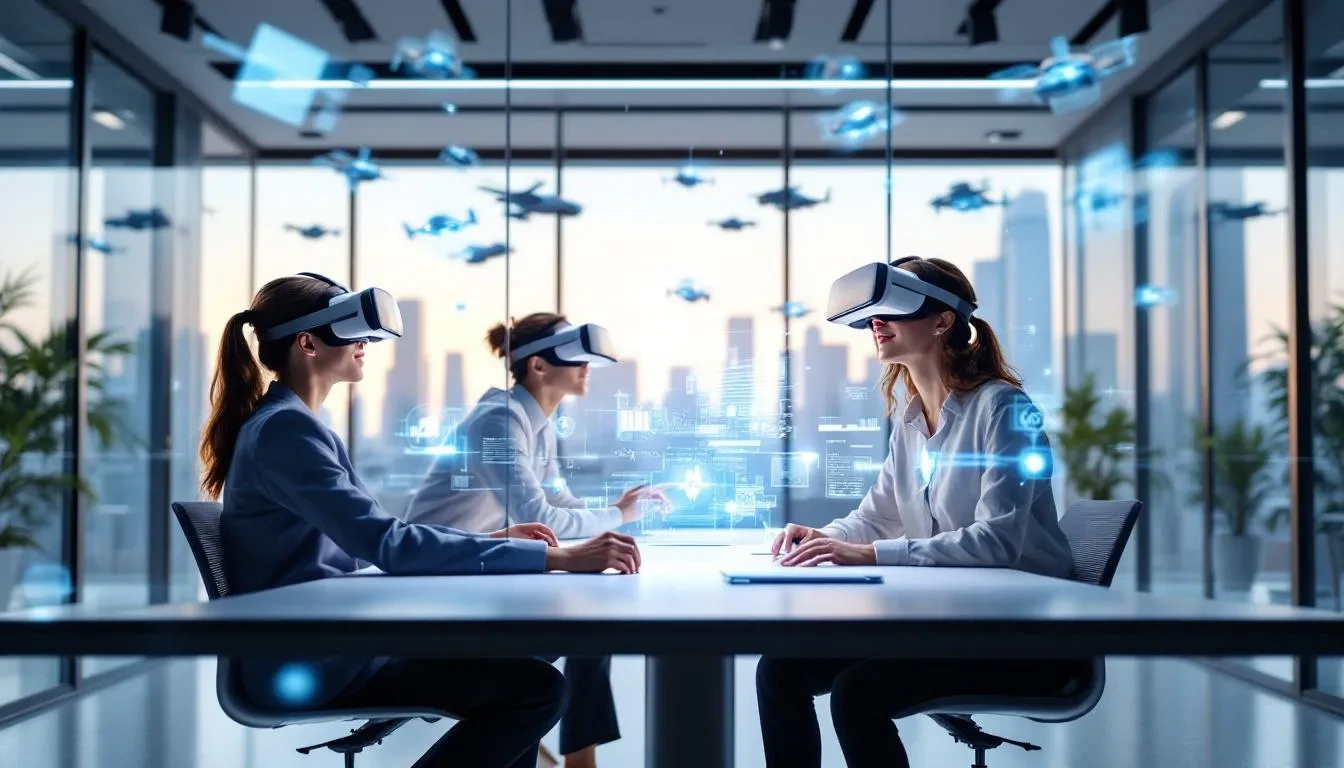
Virtual Reality Training Revolution: VR training programs will replace traditional apprenticeships in many technical fields, offering safe, repeatable learning experiences that accelerate skill development while reducing training costs.
Four-Day Work Week Adoption: As automation handles routine tasks, many companies will experiment with four-day work weeks, recognizing that productivity depends more on focused effort than time spent. This trend will accelerate as competition for top talent intensifies.
Mandatory Continuous Learning: Workers will spend approximately 20% of their time on skill development as continuous learning becomes mandatory for career progression. This will require new approaches to work-life integration and learning management.
These trends suggest a future workplace that’s more flexible, technology-integrated, and learning-focused than today’s environment. Success will require adaptability, technological fluency, and strong human skills that complement automated systems.
Preparing for the Technology-Driven Job Market
Successfully navigating the future of work requires proactive preparation from individuals, companies, and governments. The rapid pace of change means waiting for clear signals before acting is a recipe for obsolescence.For Individual Workers: Embrace a lifelong learning mindset and allocate significant time for regular upskilling. Focus on developing uniquely human skills like creativity, emotional intelligence, and critical thinking that complement rather than compete with AI capabilities. Build adaptability and maintain a growth mindset to navigate rapid technological changes successfully.
For Companies: Invest heavily in employee training and create clear career progression paths that incorporate new technologies. Develop human-machine collaboration strategies that maximize both technological efficiency and human potential. Foster cultures of continuous learning and experimentation that enable rapid adaptation to market changes.
For Governments and Educational Institutions: Fund comprehensive retraining programs and update education systems for the digital economy. Focus on developing both technical skills and the critical thinking abilities needed for lifelong learning. Create policies that support workforce transitions while ensuring technology benefits are broadly shared.
The key insight is that preparation must be ongoing rather than reactive. Those who continuously develop their capabilities, embrace new technologies, and maintain adaptability will thrive in the technology-driven job market. Those who wait for change to arrive will find themselves struggling to catch up.
Success requires balancing technological proficiency with uniquely human capabilities. The future belongs to workers who can leverage AI tools to amplify their creativity, use data science to inform their judgment, and apply emotional intelligence to lead teams through constant change.
The future of work isn’t something that will happen to us—it’s something we’re actively creating through our choices today. By understanding these trends and preparing accordingly, we can ensure that technological advancement enhances rather than threatens our career prospects and economic well-being.
The transformation is already underway. The question isn’t whether these changes will occur, but whether we’ll be ready when they do. The future belongs to those who prepare today, embrace continuous learning, and develop the skills needed to thrive in an increasingly technology-driven world.

Contributor
Emmanuel Sanni
Emmanuel is passionate about digital transformation, service excellence, and sustainable human-centric leadership. Outside of his professional role, he is actively involved in church ministry and enjoys exploring local history and emerging technology trends.
