
.jpg)
How to Use AI to Rewrite Your Resume Without Losing Your Unique Voice and Impress Recruiters
Photo by ThisIsEngineering
Phew! I’ve just sieved through about thirty resumes for a particular position. I still have about twenty-two more to go, yet I haven’t seen any resume with the spark of humanity I’m looking for.I’m beginning to worry that I may not find the right candidates to shortlist for an interview, even though all fifty-plus resumes submitted have passed the ATS system so they're potential good candidates. But the resumes are all starting to sound the same: soulless, impassionate, and stiff.
Thankfully, in the end, I was able to get five candidates to interview.
In an era where almost anyone can use AI to completely writeup an entirely new resume with the right prompt, making it easy to pass ATS systems, there’s one important element often overlooked: making absolutely sure your resume breaks the mold and lets your real voice, your humanity, shine through. Sure, it’s important to tick all the right boxes and insert the right keywords, but don’t forget to inject your personality into your resume as well.
I love technology and I enjoy exploring new tech trends. I know Artificial Intelligence is truly coming of age and that we’ve barely scratched the surface of its potential or use cases. Yet, I’m conservative about how I use it, and careful about the ethics behind it.
To be upfront, I’ve put this article through an AI content editor so it can pass editorial review. Just setting the record straight. I’m a believer.
Many Fortune 500 companies are now using applicant tracking systems (ATS) to scan resumes today, and most hiring managers don’t have the luxury of time to go through every resume that makes it pass the ATS. This reality leave candidates staring at a blank resume page, searching for a way to get past both the ATS algorithms as well as human reviewers.
AI tools are being used to counter this challenge, but an increasing number of professionals are now worried about losing their personal, authentic voice to AI-generated lines. Yes, AI generated resume can give you a strong basis and a structured starting point. However, you risk ending up with a resume that reads just like every other generic, soulless one out there. The good news is that you don’t have to choose between efficiency and genuineness. If you get it right, you can use AI resume builders or resume writers to create compelling resumes that will make it through the applicant tracking systems, while still preserving your unique voice and story that make you stand out from the others.
Giving AI written content an added human touch and personal touch or a sort of personal flavor is what makes the difference between your resume standing out or being just a generic template of every other person that does not reflect your individuality.
This article will guide you through how to use AI resume writers as an enabler to help you rewrite your resume without losing your professional personality, so you can land more job interviews while staying true to your authentic self.

Why AI Resume Rewriting Is Essential
The job market has changed fundamentally. Job seekers go through an evaluation process that can be divided into two stages: the first stage is that their resumes must get a good score in applicant tracking system algorithms to get to the human recruiters, then the second stage is that they should be able to draw the attention of the reviewer in a few seconds.A hybrid approach that uses both AI tools and human expertise is essential. AI makes resume writing faster as it automates and smoothens the whole process, thereby allowing job seekers to respond quickly to new opportunities without compromising on the quality of their applications.
The Numbers Reveal the Problem
This is what the numbers say about how big the issue is:How AI Tools Solve Core Resume Challenges
Modern AI resume rewriter tools, including advance AI rewriter solutions, addresses a number of resume challenges that have always been a headache for job applications on the whole:The Blank Page Dilemma: Instead of just looking at a blank document, AI tools give a rough outline or structure along with suggestions for content based on your background and the job descriptions provided.
Keyword Optimization: AI can thoroughly analyze job descriptions and point out the relevant keywords to be used in your resume, so your resume gets past applicant tracking systems.
AI Rewriter for Bullet Points: An AI rewriter tool is capable of automatically upgrading the ordinary bullet points and achievement by changing them into impactful, number-driven statements.
Maintaining Formatting Consistency: AI can facilitates the correct basic formatting that will be easily readable by both the ATS scanners and human recruiters.
Speed of Customization: The process of manually adjusting resumes for each job posting which use to take several hours can now done in minutes, allowing you to apply for more suitable positions.
AI Assistance vs. AI Replacement
The main distinction that successful job seekers recognize is making AI a partner in the process strategically rather than simply letting it take over the resume writing process. AI must do the hardest, most tedious work, the heavy lifting; which are first to coming up with the structure, then keyword optimization, and providing your first drafts. While you still maintain control, the power to direct the story, highlight the relevant achievements, and set the professional tone.It’s clear that resumes that have been completely rewritten by AI without human review or input will certainly loose authenticity and risk being soulless, which is a vital consideration that most companies, especially for senior management positions, will factor in highly. The combination of AI ability and human insights and intuition is the widely accepted gold standard for resume improvement.
The Voice Preservation Framework: Your 4-Step Strategy
Maintaining your authentic voice while leveraging the use of AI requires a systemic approach. The framework below will make sure you get the benefits of AI assistance without losing what makes you uniquely qualified.Step 1: Document Your Authentic Professional Voice
Before engaging any ai tool, spend 30 minutes capturing your natural communication style. Review your recent professional emails, LinkedIn posts, and any presentations you’ve given. Note recurring phrases, your preferred way of describing achievements, and the tone you naturally adopt when discussing your work.Create a “voice document” that includes:
This baseline documentation serves as your North Star throughout the AI rewriting process.
Step 2: Use AI for Structure and Optimization, Not Storytelling
Deploy AI tools for their strengths while preserving your narrative control. Let AI handle:While AI spits out structured content quickly, it's essential to review and personalize the output to avoid an impersonal or overly polished tone. Reserve storytelling elements for your personal input:
Step 3: Inject Personal Experiences and Specific Achievements
Transform generic AI suggestions into compelling personal narratives by adding specific details only you would know. Instead of accepting an AI-generated bullet point like “Managed social media accounts to increase engagement,” develop it into “Transformed company’s dormant Instagram presence into active community of 15,000 followers by implementing user-generated content campaigns and daily engagement protocols.”Step 4: Review and Adjust Tone to Match Your Communication Style
Read your AI-enhanced resume aloud and compare it to your voice document. Look for:
Identifying Your Unique Professional Voice
Your professional voice goes beyond merely the writing style. It is a reflection of your career philosophy, problem-solving approach, and value proposition. Most professionals have never clearly specified these elements in their AI generated resumes.Exercise: Mining Your Natural Patterns
Collect 10-15 professional communications you’ve written recently, for example, your emails to colleagues, project updates, LinkedIn posts, etc., and analyze them for:
Identifying Signature Achievements
Every professional has 2-3 career moments that define their unique value. These might be:
Creating Your Personal Brand Statement
Develop a 2-3 sentence statement that captures what makes you uniquely valuable. This statement should be hard for AI to generate without your specific input. For example:
“I'm an accomplished Software engineer who bridges the gap between complex technical systems and user-friendly interfaces, and has a successful record of reducing customer support tickets by 40% through thoughtful user-oriented and simple design enhancements.”
Warning Signs Your Voice Is Getting Lost
Watch for these red flags in AI-generated content:
Smart AI Prompting Techniques That Preserve AuthenticityYour AI generated output will depend on the quality of the input you provide. It is a prompt game. If your prompt is general in nature, the results you get will be 'common'. If your prompts are rich in context and incorporate your individual experiences, you will get a result that maintains your authentic voice.
The Context-Rich Prompt Method
Instead of asking AI to “write a professional summary,” provide comprehensive context:
Generic Prompt: “Write a professional summary for a project manager.”
Context-Rich Prompt: “Write a professional summary for a project manager with 7 years of experience in healthcare technology implementations. I've directed teams of 15‒20 working in cross-functional environments, specializing in stakeholder communication in some very complex software migrations, and consistently delivering projects 15% under budget due to careful vendor negotiation. My style is direct and results-oriented while still being collaborative and focusing on relationship building as a key factor for project success..”
A weak prompt, such as the generic example above, often yields generic and less personalized AI outputs. In contrast, this context-rich approach ensures AI understands not only what you do but also how you do it and what is unique about your approach.
Providing Actual Achievements, Not Job Descriptions
AI tools often default to generic job description language when given minimal input. You can resolve this by feeding it with specific, quantified examples:
Instead of: “Managed marketing campaigns.”
Provide: “I was able to generate 2,400 qualified leads through a Q3 product launch campaign. Those lead conversions contributed a revenue of $1.2M within 90 days, using a combination of targeted LinkedIn ads and partnering with industry conferences.”
Template Prompts for Different Resume Sections
To help, you can try these prompt templates or modify them to suit your scenario:
Professional Summary Prompt Template: Use this template to craft a compelling resume summary that highlights your specific, quantifiable achievements and relevant skills:
“Write a professional summary for a [job title] with [X years] experience in [industry/specialty]. Key achievements include [specific achievement with numbers], [unique skill or approach], and [signature project or result or award]. My professional style is [description of how you work], and I want to emphasize [unique value proposition]. Target role: [specific job title at specific type of company].”
Work Experience Bullet Point Template: “Rewrite this bullet point using the challenge action result framework: [describe specific situation], [what you did], [quantified outcome]. Maintain a [professional/conversational/technical] tone and emphasize my role in [teamwork/innovation/problem-solving].”
The Iterative Refinement Process
An effective AI-assisted resume writing rarely ever ends up perfect at the first instance.
Usually, you'll need 3-4 iterations:
First Pass: Generate initial structure and contents using better and detailed prompts engineering.
Second Pass: Refine the tone and remove generic phrases.
Third Pass: Make sure formatting is consistent across sections and that it remains in alignment with your voice.
Final Pass: Target and optimize the resume to specific job postings.
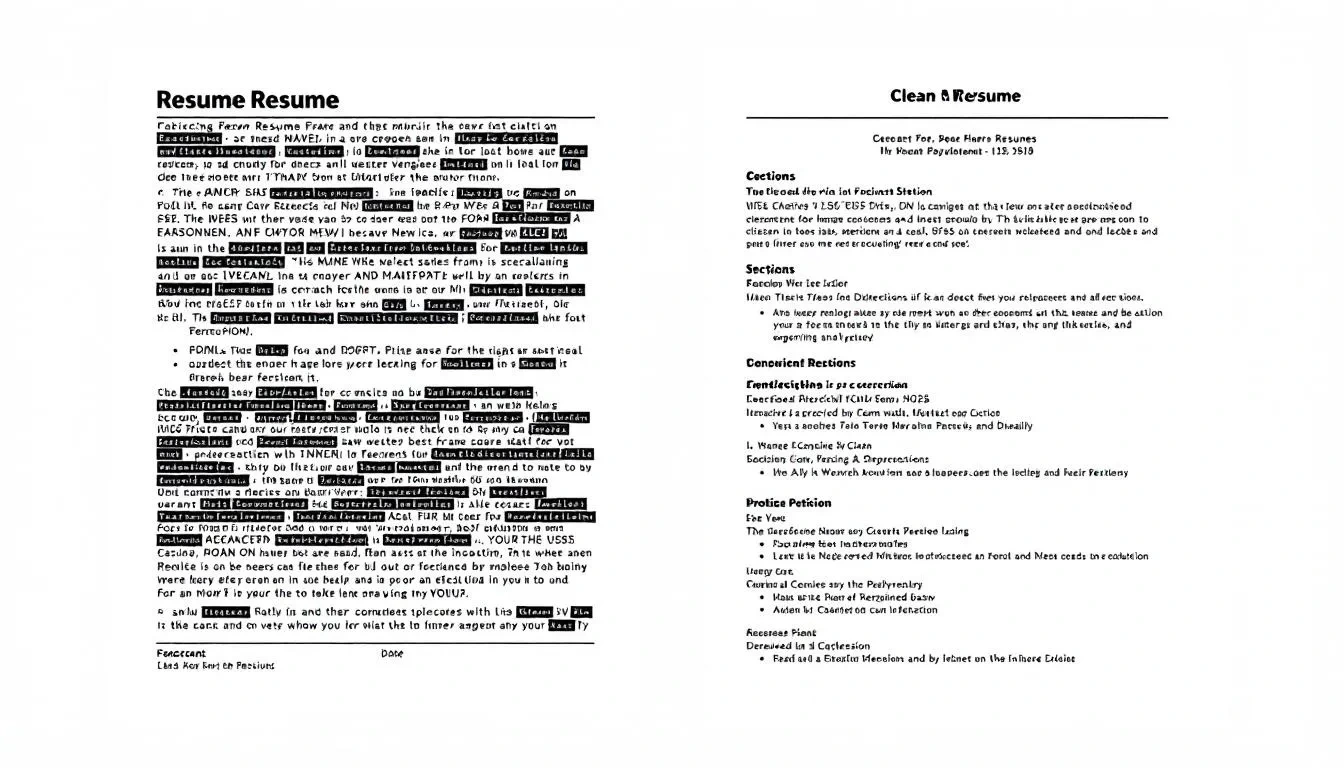
Advanced Prompting for Different Resume Sections
Each resume section requires different prompting strategies to maintain authenticity while optimizing for both ATS systems and human readers.
Professional Summary Prompts for Unique Career Journeys
When addressing employment gaps or a complex work history, prompt AI to use the right words to frame these periods as strategic or skill-building opportunities, turning potential weaknesses into strengths.
For career changers: “Write a professional summary that connects my background in [previous field] to my target role in [new field]. Emphasize transferable skills like [specific examples] and explain how my unique perspective from [previous industry] adds value to [target industry]. Include my recent certification in [relevant credential] and highlight my [specific personality trait] approach to [relevant skill].”
For returning professionals: “Create a professional summary for someone returning to [field] after [time period] focusing on [what you did during gap]. Emphasize how my experience with [specific activities during gap] enhanced my skills in [relevant areas] and how my proven track record in [previous achievements] demonstrates my continued value in the field.”
Work Experience Bullet Points Using Your Specific Metrics
The car method (Challenge, Action, Result) becomes more powerful when you provide AI with your actual data:
“Using the car method, rewrite this experience: I was responsible for improving our customer onboarding process. The challenge was that 30% of new customers weren’t completing setup within 30 days, leading to higher churn rates. I redesigned the onboarding workflow, created video tutorials, and implemented automated check-in emails. This reduced incomplete setups to 8% and improved 90-day retention by 25%. Write this in a confident but not boastful tone.”
Skills Section Optimization Without Losing Expertise
“Create a skills section for a [job title] targeting [specific role]. Include these technical skills I actually possess: [list], but organize them in order of relevance to [target job]. Also include these soft skills that I’ve demonstrated through [specific examples]: [list]. Avoid generic buzzwords and focus on skills that align with [specific job posting requirements].”
Cover Letter Integration for Consistent Voice
“Write a cover letter that complements this resume [paste resume] for [specific job posting]. Maintain the same professional tone and refer to specific achievements mentioned in the resume. Focus on why I’m specifically interested in [company name] because of [research you’ve done about company]. Connect my experience with [specific requirement from job posting] to their needs.”
Making AI-Generated Content Memorable
Numbers make achievements tangible, but many professionals struggle to quantify their impact in meaningful ways. Quantifying your achievements is a hallmark of a great resume that stands out to both ATS and human reviewers. AI can help identify opportunities for quantification, but you must provide the actual data to maintain credibility and authenticity.
The Numbers Brainstorming Technique
Most professionals underestimate their quantifiable achievements. Use this systematic approach to uncover hidden metrics:Time-Based Metrics: How much time did you save (for yourself, your team, or customers)? How quickly did you complete projects compared to estimates or previous benchmarks?
Financial Impact: Revenue generated, costs saved, budget managed, procurement negotiations, efficiency improvements that reduced expenses.
People and Processes: Team size managed, stakeholders coordinated, processes improved, training delivered, relationships built.
Performance Improvements: Percentage increases in key metrics, error reductions, quality improvements, customer satisfaction gains.
Transforming Vague AI Suggestions into Specific Achievements
AI often generates impressive-sounding but vague bullet points. Here’s how to inject your specific data:AI Suggestion: “Improved team productivity through process optimization” Your Enhancement: “Streamlined weekly reporting process by implementing automated dashboards, reducing team’s administrative time by 8 hours per week and allowing focus on strategic initiatives that increased client satisfaction scores by 15%”
AI Suggestion: “Led successful product launch” Your Enhancement: “Led cross-functional product launch involving 12 departments, coordinating 45 pre-launch activities over 6 months, resulting in 150% of first-quarter sales targets and recognition as ‘Product Launch of the Year’”
Examples of Before/After AI Enhancement with Personal Data
Before (Generic AI Output):After (With Your Specific Data):
Handling Situations Where Exact Numbers Aren’t Available
Use Ranges: “Reduced customer complaints by approximately 40-50%” (when you know it was significant but don’t have exact figures)
Provide Context: “Led the largest software migration in company history” (when it’s a fact but specific user numbers aren’t available)
Use Comparative Language: “Achieved highest customer retention rate in department” (when you know you performed best but don’t have specific percentages)
Describe Scale: “Managed complex project involving six vendors and three international offices” (when the complexity is the impressive factor)

ATS Optimization Without Sacrificing Readability
Applicant tracking systems scan for specific elements, but over-optimization can make your resume unreadable to human recruiters. Using the right keywords is essential for ATS optimization, as it ensures your resume matches the job description and stands out to both software and hiring managers. The key is strategic keyword integration that feels natural and authentic to your experience. Not all AI resume builders are created equal, so choosing a tool tailored to your career stage can significantly impact your results.Using AI for Keyword Analysis While Maintaining Natural Flow
Modern ai tools can analyze job descriptions and identify critical keywords, but the integration must feel organic. Here’s how to use AI strategically:The Gap Analysis Technique: Upload your current resume and target job posting to an AI tool. Ask it to identify missing keywords that align with your actual experience, not just any missing terms.
Prompt Example: “Analyze this job description and my resume. Identify keywords I’m missing that I could legitimately include based on my experience. Don’t suggest keywords for skills I don’t have. Focus on different ways to describe what I already do.”
Natural Integration Strategy: Instead of stuffing keywords, use AI to help you find alternative ways to describe your existing skills using industry-standard language.
The Gap Analysis Technique: Comparing Resume Against Job Descriptions
Systematic comparison reveals optimization opportunities:1.Identify Core Requirements: Use AI to extract the 10-15 most important qualifications from the job posting
2.Map Your Experience: Match each requirement to specific examples from your background
3. Find Language Gaps: Identify where you have the experience but use different terminology
4. Strategic Integration: Incorporate job-specific language without changing the meaning of your achievements
You can upload your own resume to AI tools, which will analyze and suggest targeted improvements to better align your resume with the job description.
Example Process:
Formatting Best Practices for Both ATS and Human Readers
Certain formatting choices satisfy technical requirements while remaining visually appealing:ATS-Friendly Formatting:
Human-Readable Enhancements:
Testing Your AI-Rewritten Resume with ATS Scanners
Before submitting applications, test your resume’s ATS compatibility:Free Testing Tools:
Manual Testing:
Common AI Resume Mistakes That Kill Your Unique VoiceUnderstanding what doesn’t work is as important as knowing what does. These common pitfalls can transform an effective AI-assisted resume into a generic document that fails to impress recruiters.
The Generic Language Trap
AI tools often default to overused phrases that immediately signal automated content creation. These generic phrases include:
Overused AI Phrases to Avoid:
Why These Phrases Backfire: Hiring managers see these phrases hundreds of times. They provide no specific information about your unique qualifications and suggest you haven’t taken time to personalize your application.
Better Alternatives: Replace generic phrases with specific descriptions of your approach or style:
Accuracy Issues: How AI Can Hallucinate False Achievements
AI tools can inadvertently create or exaggerate achievements that don’t exist in your background. Common accuracy issues include:Mathematical Errors: AI might inflate percentages or create unrealistic metrics based on limited input
Timeline Confusion: AI can misplace achievements or combine experiences from different roles
Skill Misattribution: AI might assign technical skills or certifications you don’t actually possess Industry Inaccuracies: AI can apply terminology incorrectly or suggest approaches that don’t align with industry standards
Prevention Strategy: Always fact-check every claim in your AI-generated content. If you can’t provide specific evidence for an achievement during an interview, don’t include it on your resume.
Tone Inconsistency Between Resume and Interview Personality
Your resume voice should align with how you communicate in professional settings. Common tone mismatches include:Over-Formalization: AI might make you sound more corporate or formal than your actual communication style
Buzzword Overload: AI can pack your resume with industry jargon you wouldn’t naturally use
Confidence Misalignment: AI might make you sound more (or less) confident than your natural professional demeanor
Alignment Test: Read your resume aloud and ask: “Does this sound like something I would say in a job interview?” If the answer is no, revise accordingly.
Over-Optimization That Makes You Sound Like Every Other Candidate
The pursuit of perfect ATS scores can lead to resumes that satisfy algorithms but bore human readers. Signs of over-optimization include: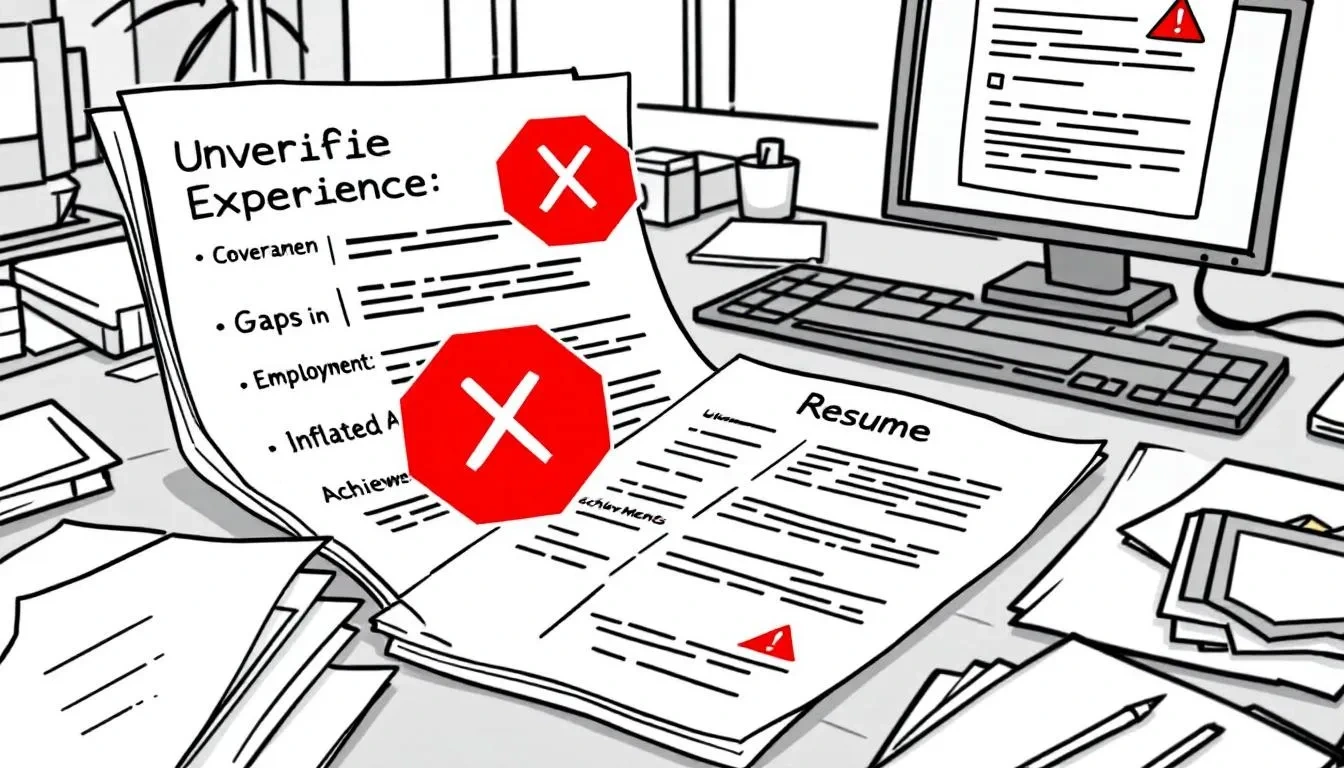
Red Flags That Reveal AI Usage to Recruiters
Experienced recruiters can often identify AI-generated content through subtle patterns and inconsistencies.Buzzword Overload and Corporate Speak
AI tends to use more buzzwords than necessary, creating sentences like: “Leveraged synergistic solutions to optimize cross-functional deliverables and drive sustainable growth initiatives through innovative thought leadership.”
Human Translation: “Led team projects that improved efficiency and increased revenue by implementing new processes.”
Perfect Grammar But No Personality
AI produces grammatically perfect but sterile content. Compare:
AI-Generated: “Executed comprehensive project management methodologies to deliver results within specified parameters and budget constraints.”
Human-Authentic: “Managed three major software implementations simultaneously, bringing each project in under budget by negotiating flexible vendor terms and cross-training team members.”
Industry Jargon Used Incorrectly
AI might use industry-specific terms without proper context, such as:
Lack of Specific, Verifiable Details
AI struggles with the specific details that only you would know:
The Human Review Process: Your Quality Control Layer
No AI-generated content should go directly from tool to submission. A systematic review process ensures your resume maintains authenticity while benefiting from AI optimization.Creating Your Personal Review Checklist
Develop a consistent checklist that addresses both content accuracy and voice preservation:Accuracy Review:
[ ] Can I provide specific examples for every achievement listed?
[ ] Are all dates, numbers, and metrics correct?
[ ] Do job titles and company names match my actual employment history?
[ ] Are technical skills and certifications accurate?
Voice and Authenticity Review:
[ ] Does this sound like something I would say in a professional conversation?
[ ] Are the action verbs I would naturally choose?
[ ] Does my unique career progression come through clearly?
[ ] Would a former colleague recognize my communication style in this content?
Optimization Review:
[ ] Are relevant keywords included naturally?
[ ] Does the content address key requirements from target job postings?
[ ] Is the formatting ATS-friendly?
[ ] Does each section lead with my strongest qualifications?
Reading Your Resume Aloud to Catch Artificial-Sounding Phrases
Your ear often catches what your eye misses. Read your entire resume aloud and listen for:Red Flag Test: If you stumble while reading any sentence aloud, it likely needs revision. Natural-sounding professional writing should flow smoothly when spoken.
Getting Feedback from Industry Colleagues
Colleagues familiar with your work can provide valuable perspective on authenticity:What to Ask Colleagues:
Making the Request: Frame feedback requests as professional development: “I’m updating my resume and want to ensure it accurately represents my work style and achievements. Would you mind reviewing it for authenticity?”
Aligning Your Resume Voice with LinkedIn Profile and Interview Style
Consistency across all professional communications reinforces your authentic brand:Interview Preparation Alignment:

Industry-Specific Strategies for Voice Preservation
Different industries have distinct communication norms and expectations. Your approach to AI-assisted resume writing should reflect these industry-specific requirements while maintaining your personal authenticity.Creative Fields: Maintaining Artistic Voice While Meeting ATS Requirements
Creative professionals face the unique challenge of showcasing personality and innovation while satisfying technical ATS requirements.Portfolio Integration Strategy: Use your resume to direct readers to your portfolio where your creative voice can shine fully. Include phrases like “View complete branding campaign at [portfolio link]” or “Interactive design samples available at [website].”
Balancing Creativity with Keywords: For a graphic designer targeting corporate roles, blend creative language with business terminology:
Quantifying Creative Impact: Creative work can be measured in business terms:
Technical Roles: Balancing Technical Accuracy with Accessibility
Technical professionals must demonstrate expertise while remaining comprehensible to non-technical hiring managers who might review their resumes.The Translation Approach: For each technical achievement, provide both the technical detail and business impact:
Avoiding Jargon Overload: While technical skills are crucial, explain context for non-technical readers:
Instead of: “Implemented microservices architecture using Docker and Kubernetes”
Try: “Redesigned software architecture to improve system reliability and deployment efficiency, reducing downtime by 60% and enabling faster feature releases”
Demonstrating Growth and Learning: Technical fields evolve rapidly. Show how you stay current:
Sales Positions: Preserving Persuasive Tone in Achievement Descriptions
Sales professionals should maintain their natural persuasive communication style while providing concrete metrics.Results-Focused Language: Sales achievements should emphasize outcomes over activities:
Relationship Building Emphasis: Sales success often depends on relationship skills:
Competitive Achievement Context: Frame achievements within industry context:
Career Changers: Using AI to Translate Experience Without Losing Authenticity
Career changers must help readers understand how their background applies to new fields while maintaining honesty about their journey.Transferable Skills Translation: Use AI to help identify language bridges between industries:
Addressing the Transition Directly: Don’t hide your career change; explain the strategic thinking behind it:
Highlighting Relevant Learning: Show proactive preparation for the transition:
Tools and Resources for AI-Assisted Resume Writing
The landscape of AI resume tools varies significantly in capabilities, voice preservation features, and output quality. Understanding each tool’s strengths helps you choose the right combination for your needs.Comparison of Top AI Resume Tools and Voice Preservation Features
The following is a result of my personal experience with the tools mentioned and not an endorsement:ChatGPT/GPT-4 for Resume Writing:
Jobscan AI Resume Tools:
Kickresume AI Resume Builder:
Resume Worded’s AI Tools:
JustJobs AI Resume Fit Tool
Free ATS-Compatible Templates for AI-Generated Content
When using AI tools, start with templates designed for both ATS compatibility and human readability:Essential Template Features:
Recommended Free Sources:
Browser Extensions and Tools for Voice Consistency Checking
Grammarly Premium: Beyond grammar checking, offers tone detection and clarity suggestions that help maintain consistent voice across documents.Hemingway Editor: Identifies overly complex sentences and suggests simplifications, helpful for ensuring AI-generated content maintains readability.
ChatGPT Browser Extensions: Tools like “ChatGPT for Google” allow quick AI consultations while editing documents, enabling real-time voice checking.
Recommended Workflow Combining Multiple AI Tools
The Three-Tool Strategy:1.Initial Analysis (Jobscan): Upload target job posting and current resume to identify keyword gaps and ATS compatibility issues
2.Content Generation (ChatGPT): Use detailed prompts to generate improved content sections, incorporating keywords identified in step 1 while maintaining your specific experiences and voice
3.Refinement and Scoring (Resume Worded): Test final version for effectiveness and readability, making final adjustments based on scoring feedback
The Complete Workflow:
Week 1: Gather job postings for target roles and analyze common requirements
Day 1: Create voice documentation and achievement inventory
Day 2: Use Jobscan for initial keyword analysis
Day 3: Generate content with ChatGPT using context-rich prompts
Day 4: Refine and test with Resume Worded or similar tools
Day 5: Final human review and voice consistency check

Measuring Success: How to Know Your AI-Rewritten Resume Is Working
Effective resume optimization requires systematic measurement and continuous improvement. Track both quantitative metrics and qualitative feedback to ensure your AI-assisted approach is generating better results.Key Metrics to Track
Application Response Rates:Interview Conversion Metrics:
Quality Indicators:
Benchmark Tracking:
A/B Testing Different Versions of Your AI-Enhanced Resume
Testing Strategy: Create 2-3 versions of your resume with different approaches:Testing Protocol:
Variables to Test:
Feedback Collection Strategies from Recruiters and Hiring Managers
Direct Feedback Requests: After interviews (regardless of outcome), ask specific questions:Recruiter Relationship Building:
LinkedIn Engagement Monitoring:
Signs Your Unique Voice Is Coming Through Despite AI Assistance
Positive Indicators:Interview Conversations Flow Naturally: When interviewers reference specific achievements or ask follow-up questions about your unique experiences, it indicates your authentic voice is compelling them to learn more.
Recruiters Remember You: If recruiters reference specific details from your resume in follow-up conversations or remember you for future opportunities, your unique value proposition is memorable.
Industry Recognition: Colleagues or industry contacts commenting on your career progression or unique background suggest your authentic professional brand is coming through.
Specific Role Targeting: When recruiters reach out with highly specific opportunities that match your unique skill combination, it indicates your distinctive qualifications are clear.
Conversational Alignment: If your interview style and resume voice feel consistent to both you and interviewers, you’ve successfully maintained authenticity while optimizing content.
Long-term Career Trajectory Indicators:
Conclusion
Artificial Intelligence is one of the most consequential technologies that has permeated every aspect of our lives and it has fundamentally shifted the landscape for recruitment generally and resume writing in particular, but your personality, your skills, your experiences and unique professional voice remains your most valuable differentiator.The framework I have outlined will help you navigate a new world where you have to balance the efficiency of AI with your own authentic storytelling. This represents the optimal approach more and more modern job seekers find to be very effective.
This artificial intelligence technology should be an enabler to help amplify your voice, not replace it. Use AI strategically for structure, keyword optimization, and initial content generation, but always put in your own unique story, your specific experiences, achievements, and professional personality.
The goal isn’t to create a perfect resume by algorithmic standards, but to create an authentic representation of your professional value that resonates with both applicant tracking systems and human recruiters.Your career story is unique, and the most effective resume communicates not just what you’ve done, but also the way you think, your problem-solving approach, and how you create value. AI can help you tell that story more effectively, but only you can make sure that story remains authentically yours.
To begin with, it is a good start to choose one part of this framework, for example, creating your voice document or testing context-rich prompts with your professional summary. As you see results from maintaining authenticity while leveraging AI assistance, you’ll develop confidence in balancing technological efficiency with personal authenticity.
Those who succeed in today’s job market aren’t those who choose between AI optimization and authentic voice. They’re those who master balancing both. Who knows, your next great career opportunity is waiting for a resume that passes the ATS screening and compels hiring managers to pick up the phone. With these approach, you’re equipped to create exactly that.

Contributor
Emmanuel Sanni
Emmanuel is passionate about digital transformation, service excellence, and sustainable human-centric leadership. Outside of his professional role, he is actively involved in church ministry and enjoys exploring local history and emerging technology trends.
